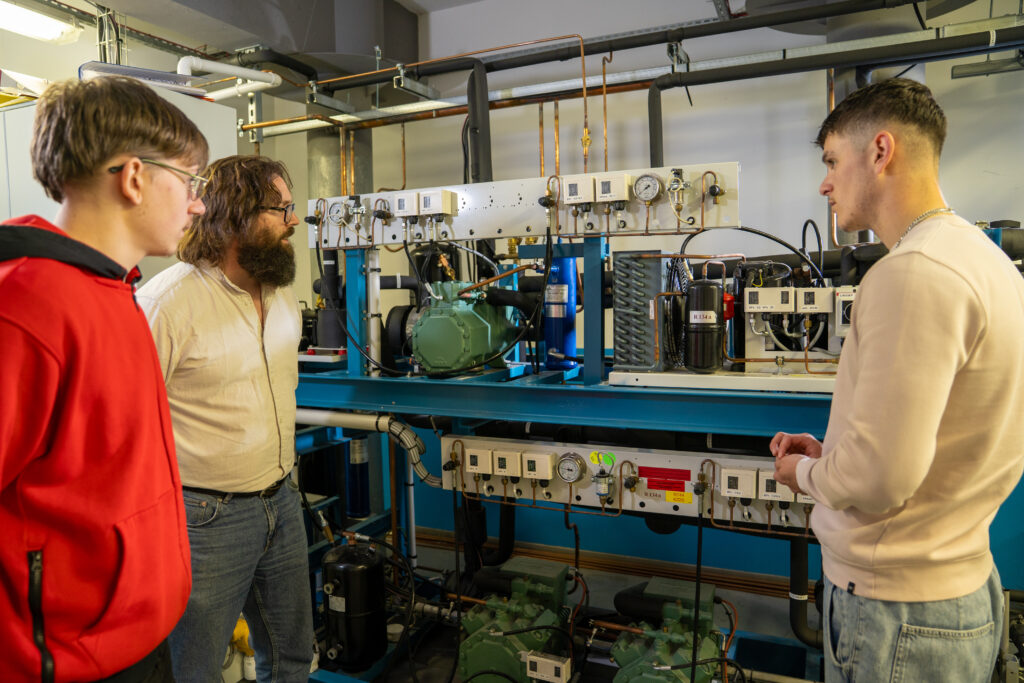
The IUT is, above all, one big family, made up of dedicated staff at every level who are committed to supporting the students.
The teaching staff at the IUT is a mix of 50% academic staff (including around ten university lecturers) and 50% other teaching staff. Furthermore, 75% of the teaching is delivered by external lecturers, who are professionals in the field.
For many people, working at the IUT also means getting involved in research. Across the various departments, there are researchers from the following laboratories:
LISIC, Computer Science, Signal and Image Laboratory of the Opal Coast
LPCA, Laboratory of Atmospheric Physical Chemistry
LMPA, Laboratory of Pure and Applied Mathematics
UCEIV, Environmental Chemistry and Interaction with Living Organisms Unit
UDSMM, Unit for the Dynamics and Structure of Molecular Materials
Their work is funded through institutional or industrial projects. Furthermore, some IUT graduates go on to further study after completing their BUT (at engineering schools or on master’s programmes) and may undertake a PhD (equivalent to eight years of higher education) as part of these projects. Without claiming to be exhaustive, examples include:
In the industrial sector
It has been decided: In response to the decarbonisation challenges faced by industrial companies along the coast, the IUT has launched a continuing professional development programme. This initiative enables employees to benefit from training courses that make use of the institution’s innovative technologies and state-of-the-art equipment. The aim is to support the region’s ecological transition and help reduce the environmental footprint of the local industrial area.
Electromob: In response to the expansion of battery gigafactories and new challenges in energy management, the IUT has launched a collaboration with local industry partners to anticipate skills requirements. The expertise of its researchers, combined with the acquisition of state-of-the-art equipment, enables the development of training programmes tailored to emerging technologies. Ultimately, specific training schemes will support the upskilling of employees in the sector.
ANR BLeRIOT: The ANR BLeRIOT project aims to provide digital tools to assist audio analysts during safety investigations following aviation incidents or accidents. A PhD student, who holds a degree in computer science from the IUT, is developing source separation techniques that involve human input and rival artificial intelligence techniques without requiring large training datasets.
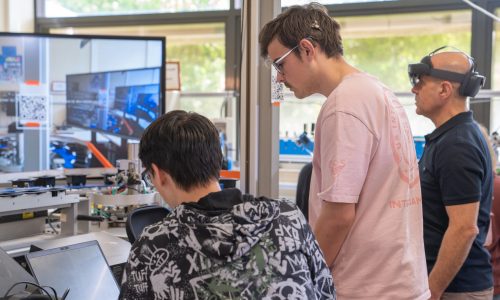
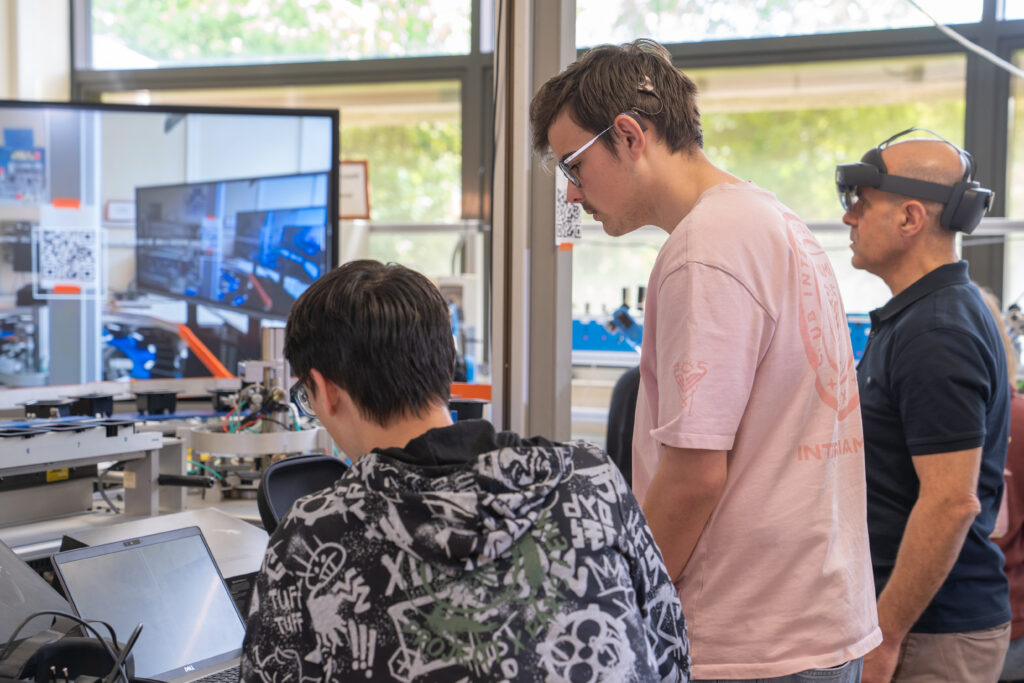
Lasagnes: The IUT is committed to integrating new technologies. Following on from virtual reality and augmented reality using smart glasses, artificial intelligence now plays a key role, particularly thanks to the acquisition of a server that will eventually provide a secure internal infrastructure accessible to all. This development also presents an opportunity to introduce the courses of tomorrow, focusing on sensors, but also on the use of results generated by artificial intelligence for professional purposes. The aim is thus to prepare students for the technological challenges of the future. All of which helps prepare them for the future…